
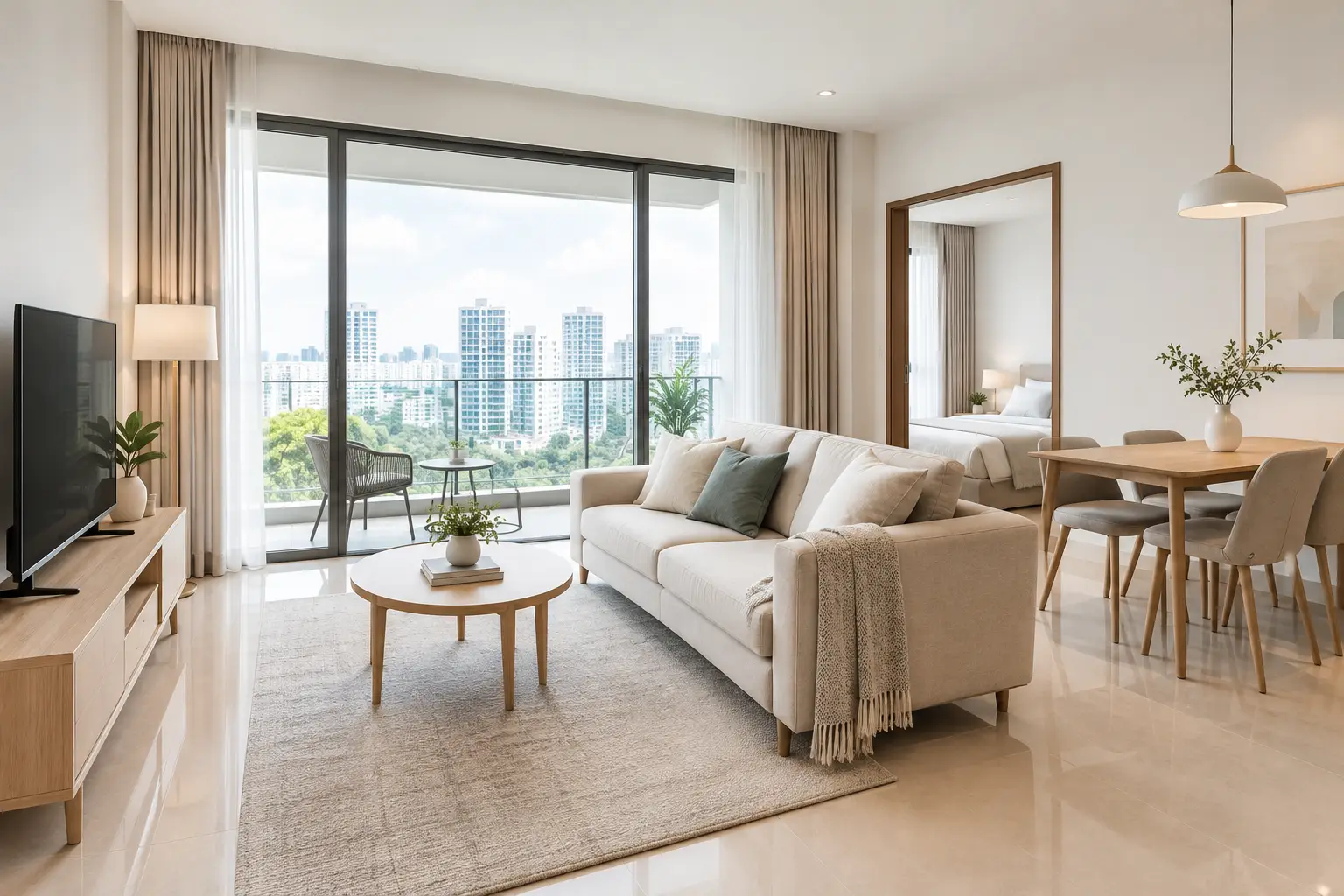
A vacant property rarely feels as generous in a photograph as it does on a floor plan. Without furniture, buyers may focus on an awkward corner, underestimate room sizes or struggle to understand how daily life would work there. Showflat staging gives them useful visual answers before they have to ask.
For property agents and sellers in Singapore, this is not about filling every room with decorative pieces. It is about preparing a home to photograph well, feel considered during viewings and help the right buyer picture themselves living there. A clear, well-furnished space can make the layout easier to read, particularly in units that are empty, dated or occupied with furniture that distracts from the home itself.
What showflat staging is designed to achieve
Good showflat staging is property presentation with a commercial purpose. It uses furniture, lighting, soft furnishings and selected accessories to show the function, scale and potential of a home. The result should feel welcoming, but believable. Buyers should see a home they can imagine adapting to their own lives, not a room that looks like a catalogue set.
This matters most when the property has little visual guidance of its own. An empty living room can appear smaller than it is. A study may be mistaken for a storage area. A narrow dining space can feel impractical until a properly sized table shows that it can comfortably seat four or six people.
Staging also supports the first stage of property marketing: the listing. Buyers often decide whether to enquire based on a small number of images viewed quickly on a screen. Bright, tidy photographs with clear room functions give them more reason to continue looking. By the time they attend a viewing, they already have a stronger sense of what the property offers.
Start with the likely buyer, not a fixed look
There is no single staging style that works for every property. A compact one-bedroom flat near the CBD may appeal to a professional couple or an investor. A larger condominium near schools may need to speak to a family. A landed home may benefit from showing flexible spaces for work, entertaining and multigenerational living.
The most effective approach begins with the property’s likely audience, asking practical questions. Is the home being marketed as a first purchase, a family upgrade, an investment unit or a rental-ready property? Is the strongest feature the view, the ceiling height, the location or the usable floor area? The furnishings should direct attention towards those strengths.
For a family-sized home, this might mean a comfortable but neatly proportioned sofa, a dining setting that demonstrates everyday use and bedrooms that feel calm rather than overly themed. In a smaller unit, furniture with lighter visual weight can preserve a sense of openness. A slim dining table, a compact desk and carefully placed mirrors may help buyers understand the available space without making the home feel crowded.
Neutral colours are usually the safest foundation, particularly when a seller wants broad appeal. That does not mean a staged home should feel bland. Texture, artwork, greenery and cushions can add warmth, while keeping the overall palette calm enough for buyers to project their own preferences onto the space.
Function should be obvious at a glance
Every room should answer a simple question: what could I do here? This is especially useful in homes with an enclosed balcony, an unusual nook, a small utility room or a sizeable common bedroom.
A modest desk and chair can establish a work-from-home area. A bedside table and proper lighting can make a second bedroom feel usable rather than secondary. In a large living area, furniture placement can define separate zones for dining and relaxing, preventing the room from looking empty or unfocused.
It is worth resisting the temptation to force a function that does not suit the property. A tiny room dressed as a full office may make the limitation more obvious. In such cases, a flexible reading corner or occasional-use workspace can be more honest and more appealing.
The details that improve photographs and viewings
Staging is often judged first through photographs, yet it must also work when someone walks through the door. Natural light should be allowed to do its job. Curtains should frame windows rather than block them, and furniture should not interrupt a view or restrict the flow between rooms.
Scale is equally important. Oversized sofas and heavy cabinets can make even a good-sized flat feel compressed. Furniture that is too small creates the opposite problem, leaving buyers unsure whether a room can support normal living. The aim is to use realistic pieces that show the room’s capacity accurately.
A few details make a meaningful difference: a made bed suggests comfort, a dressed dining table gives the dining area purpose, and layered lighting prevents corners from looking flat or neglected. Accessories should be selective. Too many ornaments create visual noise in listing photographs and may shift attention away from the home’s finishes, windows and proportions.
Cleanliness remains essential. Staging cannot compensate for dusty floors, stained grout, poor lighting or personal clutter. Before installation, sellers should address minor repairs, touch up obvious marks and remove items that compete with the presentation. The furniture can then support the home rather than conceal unresolved issues.
Why rental staging suits time-sensitive listings
Purchasing furniture solely to market a property is rarely the most practical choice. It requires time to source pieces, arrange delivery, coordinate assembly and decide what to do with everything after the sale or lease is complete. This is particularly inconvenient for vacant units, inherited properties and homes where the existing furniture is unsuitable for marketing.
Rental staging provides a more flexible route. Furniture is selected for the property, delivered, installed and collected after the agreed period. It allows agents and sellers to prepare a home without taking on permanent ownership of furnishings that may have no use once the campaign ends.
The budget should reflect the value and positioning of the property. A high-end unit may need more considered styling and a fuller setup across several rooms. For a straightforward rental listing, a focused package covering the living, dining and main bedroom areas may be enough to improve photographs and show the unit’s practical potential. The right level depends on the condition of the property, the target market and how much visual competition it faces.
At Expats Partner, staging support is planned around these realities: suitable furniture, practical space planning, coordinated setup and collection once the property no longer needs to be presented. This reduces the coordination burden on agents while giving sellers a clear plan for preparing the home.
Plan staging around the marketing timetable
Staging has the greatest value when it is ready before professional photography and the first listing launch. If furniture arrives after the property has already been advertised, the strongest images and early buyer attention may already have been lost.
Agents should ideally confirm the photography date, viewing schedule, access arrangements and building delivery requirements before booking the setup. Condominium management offices may require advance notice for lorry access, lift protection or specific delivery hours. These details are unglamorous, but handling them early prevents unnecessary delays.
It also helps to agree who will maintain the staged home while it is on the market. Windows should be opened before viewings where appropriate, lights switched on and surfaces kept clear. If the property remains vacant for several weeks, a quick check before an important viewing ensures the presentation remains fresh.
Common staging mistakes to avoid
The most common mistake is treating staging as decoration rather than communication. A room can look attractive yet still fail to show its true purpose or dimensions. Another is styling every room to the same degree. Buyers tend to remember the living area, dining space, main bedroom and any distinctive feature such as a balcony or study. These areas deserve the greatest attention.
Personal items can also weaken the effect. Family photographs, crowded collections and very specific tastes make it harder for buyers to see the home as their own. Sellers do not need to remove all character, but they should create enough visual space for a new owner’s imagination.
Finally, avoid staging beyond the property’s natural character. A modest flat should not be dressed in a way that feels excessively formal, and a family home should not look too precious to live in. The most persuasive presentation feels appropriate to the location, layout and expected buyer.
A well-staged property does not make decisions for buyers. It helps them make those decisions with greater clarity. When each room feels useful, proportionate and ready to live in, the viewing can move beyond questions about what might fit and towards the more valuable question of whether this feels like home.