
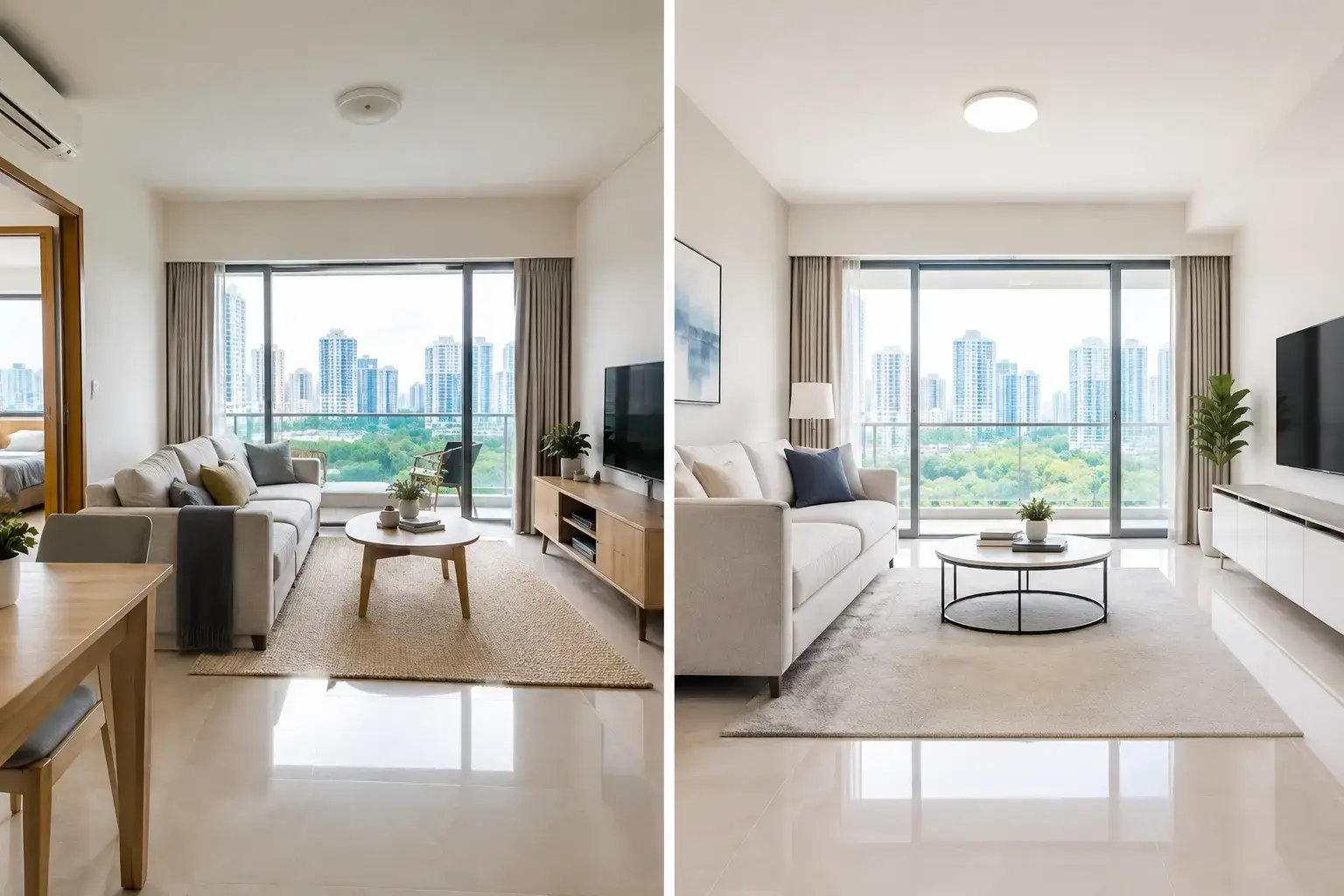
A vacant condominium living room can look larger in person than it does in a listing photo. Without furniture, buyers may struggle to judge where a sofa would sit, whether a dining table will fit, or how the light works across the space. That is where the decision between staging versus virtual staging becomes practical rather than purely visual: are you preparing a property for photographs alone, or for every viewing that follows?
Both approaches can help a listing look more considered. The better choice depends on the property’s condition, marketing plan, audience, budget and likely viewing volume. For many Singapore agents and sellers, the most useful question is not which option is universally better, but which one supports the next step in the sale or rental process.
What physical home staging does
Physical staging places real rental furniture, soft furnishings, lighting and accessories in the home. A staging team plans the layout, delivers the pieces, sets up the rooms and collects everything when the agreed rental period ends. The aim is not to fill every corner. It is to give buyers a clear sense of scale, flow and everyday use.
In a two-bedroom flat, that may mean defining the living area with a compact sofa and rug, showing a workable dining zone, and styling the spare room as a study or guest bedroom. In a landed home, it may mean creating a more welcoming arrival space and helping large rooms feel purposeful rather than empty.
The value becomes especially clear during viewings. Buyers can walk through the rooms, see proportions in real life and understand how the home may support their routine. They do not need to imagine every piece of furniture before they can judge the space. This is useful when a property is vacant, has an unusual layout, or has been on the market long enough for presentation to need a reset.
Physical staging also gives agents consistent material for photography, video tours and in-person appointments. The same calm, well-organised impression shown online continues at the door. That consistency can build confidence, particularly for buyers comparing several homes in one day.
What virtual staging does
Virtual staging uses digital furniture and décor added to photographs of an empty room. It can show a living room, bedroom or study in a more appealing way without moving any physical items into the property. For a listing that needs to go live quickly, it is often the faster and lower-cost option.
Done well, virtual staging can help buyers read an empty space at first glance. A carefully scaled sofa, dining setting and neutral styling can make a room feel less stark in a property portal listing. It can also demonstrate different possible uses for one room, such as a nursery, home office or guest room.
There are limits, however. Virtual furniture exists only in the marketing images. When buyers arrive for a viewing, they will see an empty room unless the property has been physically furnished in the meantime. The difference may not be a problem if expectations are handled clearly, but it can make the viewing feel less compelling than the photographs.
Virtual images should be realistic and used transparently. They should not alter permanent features, conceal damage, enlarge rooms or imply a view or finish that does not exist. A clear note that an image is virtually staged helps manage expectations and protects the credibility of the listing.
Staging versus virtual staging: the key differences
The most significant difference is the experience each one creates. Virtual staging is designed for the first moment of attention online. Physical staging supports that first impression and carries it through photography, video, open houses and private viewings.
Cost is another factor. Virtual staging usually has a lower upfront cost because it involves image editing rather than furniture rental, delivery and installation. It may be a sensible choice for a property with a limited marketing budget, a very short listing window, or a seller who wants to test stronger imagery before committing further.
Physical staging requires a larger investment, but it provides an actual furnished setting for the duration of the campaign. That can be worthwhile where viewings are central to the sale, where the home is empty, or where the rooms need help to feel balanced and easy to understand. A practical rental arrangement also avoids the need for a seller or landlord to purchase, store and later dispose of furniture.
Timing deserves close attention. Virtual images can often be prepared once professional photographs are ready. Physical staging involves scheduling, access, delivery and installation, although an experienced provider can coordinate these steps efficiently around a listing date. If photography and viewings need to happen within days, confirm the required timeline early.
Finally, consider flexibility. Virtual staging lets you test visual directions in selected images. Physical staging can be adjusted too, but changes involve real items, site access and coordination. For a premium or slow-moving listing, that hands-on approach may be exactly what is needed.
When virtual staging is a sensible choice
Virtual staging works best when the main challenge is attracting online attention. An agent may be marketing a vacant unit before keys are readily available, preparing a rental listing with a short lead time, or seeking a more polished first set of photographs without committing to a full setup.
It can also be useful for rooms that are difficult to interpret in photos. A bare enclosed space may look small or awkward, while a digitally furnished image can show that it works as a study or child’s bedroom. This supports buyers at the enquiry stage, provided the image remains believable and accurately scaled.
For tenanted properties, virtual staging may be preferable when the existing furniture is dated or cluttered but cannot be removed. In that situation, it is better to use clean images of empty areas where possible than to digitally replace the tenant’s possessions in a way that could misrepresent the home. Respecting access arrangements and presenting the property honestly are both essential.
When physical staging earns its place
Physical staging is often the stronger choice for vacant private condominiums, landed homes, executive condominiums and resale properties where buyers are expected to view before making a decision. It brings warmth to photographs, but its real advantage is helping people connect with the property once they step inside.
It is particularly effective when furniture can clarify scale. A large living room can seem cold without an anchored seating layout. A narrow dining area can look restrictive until a correctly sized table shows what fits. Bedrooms can appear more usable when a bed, side tables and simple textiles establish realistic proportions.
Physical staging can also help when a seller has moved out and wants the home cared for while it is being marketed. Rather than leaving a bare unit that feels neglected, a tidy furnished setting gives the property a more settled appearance. For landlords, a furnished rental setup can similarly help prospective tenants picture a move-in-ready home and reduce the pressure of buying furniture for a short-term need.
Expats Partner approaches this work as a practical property presentation service, coordinating suitable rental furniture, styling, delivery, setup and collection so agents and owners can focus on the listing and their viewers.
Choosing the right option for your listing
Start with the role the photographs need to play. If the listing will be judged mainly through online images before a quick rental decision, virtual staging may provide enough support. If you expect several viewings, want stronger video content, or need buyers to understand room proportions in person, physical staging is usually more persuasive.
Then assess the property itself. A modern unit with a clear, standard layout may need only carefully prepared virtual images. A vacant home with long rooms, dark corners, an awkward study or an open-plan area will often benefit from real furniture and lighting that give each zone a purpose.
It is also worth considering the price point and competition. In a market where buyers have several similar options, presentation can influence which home they remember after a day of viewings. This does not mean every property needs extensive styling. A focused setup in the living, dining and primary bedroom areas may be enough to create a more complete experience.
For some campaigns, a combination is sensible. Physically stage the rooms that will be viewed and photographed most often, then use clearly labelled virtual staging to suggest an alternative use for a spare room. The key is to keep the story coherent between the listing and the home buyers actually see.
A good presentation plan should make the property easier to understand, not harder to believe. Whether you choose digital images, real furniture or a careful mix of both, aim for rooms that feel calm, proportionate and possible to live in. That gives buyers and tenants something more useful than a beautiful picture: a clear reason to take the next step.