
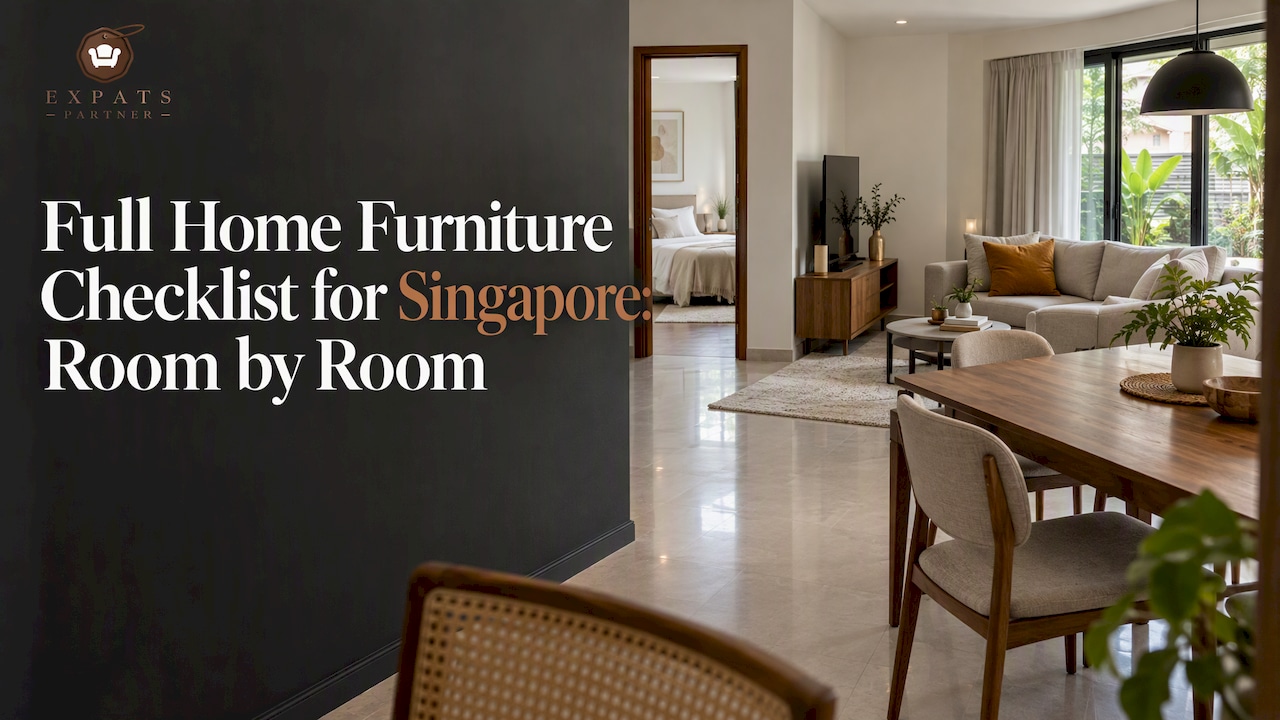
A full home furniture checklist covers six things: beds and bedding, seating, dining, storage, kitchen and laundry appliances, and lighting. Add a few safety and handover checks and you have the whole job. This guide goes room by room for a Singapore HDB flat or condominium. It also shows which items are worth buying and which are easier to rent.
TL;DR
- Furnish in this order: beds, a place to eat, core appliances, then seating, storage and lighting. Everything else can wait a few weeks.
- Measure before you order. Lift size, door width and corridor clearance decide what can physically enter your unit.
- Check every electrical item for the SAFETY Mark, and keep walkways and escape routes clear.
- Record the condition of every item on move-in day with dated photos and a signed list.
- If your stay is short or uncertain, renting a package costs less up front than buying a full set. Our 1-bedroom Vital+ package starts at S$178 per month.
Table of Contents
- Before you list anything: three decisions
- Step one: measure the home and the route in
- Living room checklist
- Dining and kitchen checklist
- Main bedroom checklist
- Children’s and guest rooms
- Home office checklist
- Bathrooms, laundry and balcony
- Safety checks before you plug anything in
- What to buy, what to rent
- Match the checklist to a ready package
- Move-in day: build the inventory record
- If you are a landlord or an agent
- A one-page summary to print
- FAQ
Before you list anything: three decisions
A checklist is only useful if it matches your situation. Settle these first.
How long will you stay? Under two years, rental usually makes more sense than buying. Furniture bought for a short posting often ends up sold at a loss, stored or thrown away. Our guide to renting furniture in Singapore sets out a move-in timeline for expats.
Is the unit furnished already? Many Singapore rentals come partly furnished, but what that means varies. One landlord leaves a bed and wardrobe, another leaves only the aircon and light fittings. Read the tenancy inventory line by line. Our page on what is included in a furnished rental helps you spot gaps.
Who is the unit for? A single professional, a couple, a family with school-age children and a home-office worker all need different things. The lists below mark where those needs diverge.
Step one: measure the home and the route in
Singapore homes are compact, and many are on high floors. Before you buy or rent anything, write down:
- Room dimensions, including the depth of built-in wardrobes and any bay window or bomb shelter alcove.
- Door widths and the clearance at corners in the corridor.
- Lift internal dimensions and whether the building requires lift padding or a booking for deliveries.
- The position of power points, aircon units and ceiling lights, since these decide where beds and sofas can go.
A 3-seater sofa that looks fine online can fail at the lift door or the unit entrance. Ten minutes with a tape measure avoids a returned delivery.
Living room checklist
The living room usually takes the largest share of the budget, so keep it simple at first.
- Sofa or loveseat. Choose by wall length, not by style. Leave room to walk past it comfortably.
- Coffee table or side tables. One low table is enough to start with.
- TV console or wall bracket. Decide whether the TV is mounted. If you are renting a home, check whether the landlord permits drilling.
- Rug. Optional. It softens the room and cuts echo on hard flooring.
- Floor or table lamp. Overhead lighting in many flats is functional rather than pleasant, so one lamp makes the evenings warmer.
- Curtains or blinds. Check whether they are already installed. Many units have rails but no fabric.
- Shoe cabinet. Many households in Singapore remove shoes at the door, so this is closer to a necessity than an extra.
Dining and kitchen checklist
- Dining table and chairs. Size by the number of people who will actually eat there. A table for four suits most couples and small families.
- Barstools. Useful only if you have a counter or island.
- Cookware, crockery and cutlery. Not furniture, but part of any honest full-home list. A starter set for the household size is enough.
- Refrigerator. Confirm whether it is supplied. In a rental, many are, but not all.
- Washing machine. Check the hookup and the space provided. Some units have it in the service yard, others in the kitchen.
- Microwave, kettle, rice cooker. Small appliances that most households use daily.
- Hob and oven. Usually fixed, but confirm they work before the first meal.
If your plan includes appliances, our range also covers appliance rental with Electrolux, which avoids buying large items for a short stay.
Main bedroom checklist
- Bed frame and mattress. Measure the room first. Queen is the common choice for couples, but a smaller room may suit a single or super-single better.
- Two sets of bedding. One on the bed, one in the wash.
- Mattress protector. It protects your mattress and, in a rental, keeps the deposit conversation simple.
- Bedside tables with lamps.
- Wardrobe or clothes rail. Check whether the room has built-in storage before buying more.
- Chair or small dresser. Optional.
Children’s and guest rooms
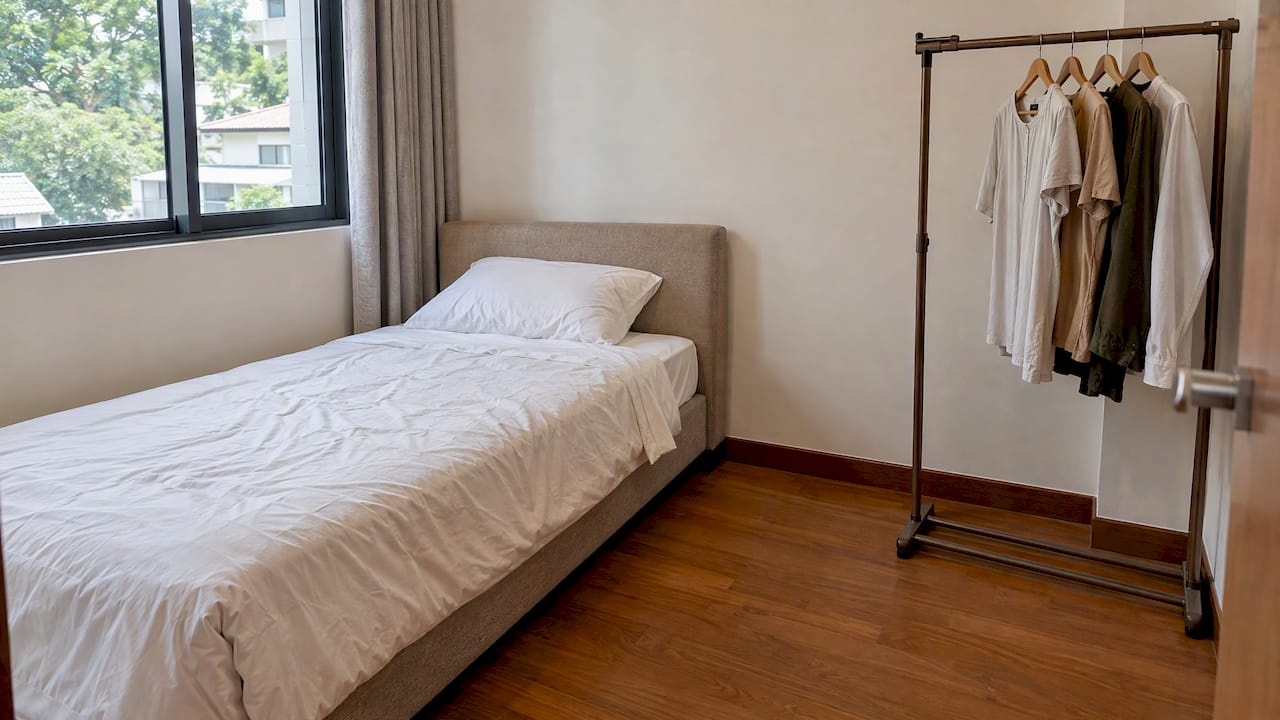
For children, add a bed of the right size, a study desk and chair, and closed storage for toys and school items. Anchor tall furniture to the wall where the building allows, and keep beds away from window grilles and cords. A guest room can be as basic as a bed and a clothes rail. Our family apartment furnishing checklist goes deeper on HDB checks for families.
Home office checklist
Hybrid work has made a dedicated desk part of a standard full-home list.
- Desk at a comfortable height, with space for a laptop or monitor.
- Ergonomic chair. Worth spending on if you sit for long hours.
- Task lighting to reduce eye strain.
- Shelving or a filing unit for documents.
- Cable management and a surge-protected power strip with the SAFETY Mark.
We cover the layout questions in our home office furnishing checklist for expats.
Bathrooms, laundry and balcony
These rooms are easy to forget, and it is a nuisance to discover the gaps on the first evening.
- Towel rails or hooks, a bath mat, a bin and a shower curtain if there is no screen.
- A laundry rack or a drying system. Many Singapore homes use bamboo poles or folding racks, and a clothes dryer is optional.
- An ironing board and iron.
- For balconies, only weather-tolerant furniture. Humidity and rain will damage indoor pieces quickly.
Safety checks before you plug anything in
Furnishing a home is also a safety exercise, and a few habits matter more than any style choice.
- Look for the SAFETY Mark on electrical appliances and plug adaptors. Singapore’s consumer product safety rules require it on regulated electrical goods, so be wary of unmarked imports.
- Do not overload sockets. Avoid chaining extension cords, and unplug appliances you are not using.
- Keep flammable items such as curtains and fabrics away from stoves and heaters.
- Keep exits clear. Corridors, the main door and the path to the gate should never be blocked by shoe racks, boxes or bulky furniture. Fire-safety guidance from SCDF stresses unobstructed escape routes.
- Place heavy furniture sensibly. Tall cabinets should sit against a wall and, in homes with children, be anchored where the building rules allow.
If a lamp or appliance has a frayed cord or a warm plug, stop using it and replace it.
What to buy, what to rent
Not every item on the list deserves the same treatment. This table shows how most households in Singapore decide.
| Item | Buy if | Rent if |
|---|---|---|
| Bed and mattress | You are settled for years and have strong comfort preferences | You are on a posting of one to three years or between homes |
| Sofa and dining set | You expect to keep them across moves | You want a ready-to-use home for your first months |
| Large appliances | You own a home and will stay | The lease is short or the landlord supplies none |
| Desk and chair | You work from home permanently | The arrangement is temporary or project-based |
| Decor, plants and lamps | You value choosing every piece | You want a coordinated look without the shopping |
| Small kitchenware and linen | Almost always | Rarely |
One more cost consideration for homeowners: Singapore renovation advisers often suggest budgeting furniture and appliances separately from the renovation quote. They also suggest buying the essentials first and spreading the rest over several months. That approach works for tenants too.
Match the checklist to a ready package
If you would rather not source each item, a package turns the list above into a single delivery. Our published monthly prices are:
| Package | Home size | Price |
|---|---|---|
| Vital+ | 1-bedroom apartment | S$178 per month |
| Comfy | 1-bedroom apartment | S$338 per month |
| Family | 2-bedroom apartment | S$718 per month |
See the current contents of each on our furniture packages page. Rental periods are flexible, from short to long term, and we coordinate delivery and collection so that you do not manage the logistics yourself. If you are moving to Singapore from abroad, start with our expatriate furnishing guide. If you are a tenant who wants to move in quickly, see move-in ready furniture rental for tenants. For a custom list, contact us through our main site.
Move-in day: build the inventory record
When you furnish a rental, the checklist has a second job: protecting your deposit. Disputes at the end of a tenancy usually come from vague inventories and undocumented defects, not from large damage.
On move-in day:
- Walk the home with the landlord or agent, ideally on or before the tenancy start date.
- Photograph every scratch, stain, chip and mark, with date stamps. Take a wide shot and a close-up of each.
- Test all appliances, including aircon, fridge, oven and hob, and record serial numbers of the major ones.
- Note meter readings for water and electricity, and gas if it applies.
- Write each defect in the inventory list, then have both parties sign and keep a copy each.
This should include any rented furniture too. Rental items have their own condition record, and keeping it separate from the landlord’s items avoids confusion at the end. Our note on furniture cleaning policy and deposit loss explains how to keep both furniture and unit in good order.
If you are a landlord or an agent
A furnished listing needs a tidy, itemised furniture list, and landlords should decide how much to supply before advertising. A fully furnished unit can attract tenants who want to move in quickly, while a lightly furnished unit leaves more choice to the tenant. Our landlord furnishing guide compares furnishing, renting furniture and staging by lease length. For sale or resale, home staging helps buyers picture the layout. Co-living operators can read our note on planning furniture around occupancy caps, and corporate housing teams can use our corporate housing furnishing guide.
A one-page summary to print
Week one, essentials: bed and mattress, two sets of bedding, towels, a dining table and chairs, fridge, washing machine, basic cookware, lamps, curtains.
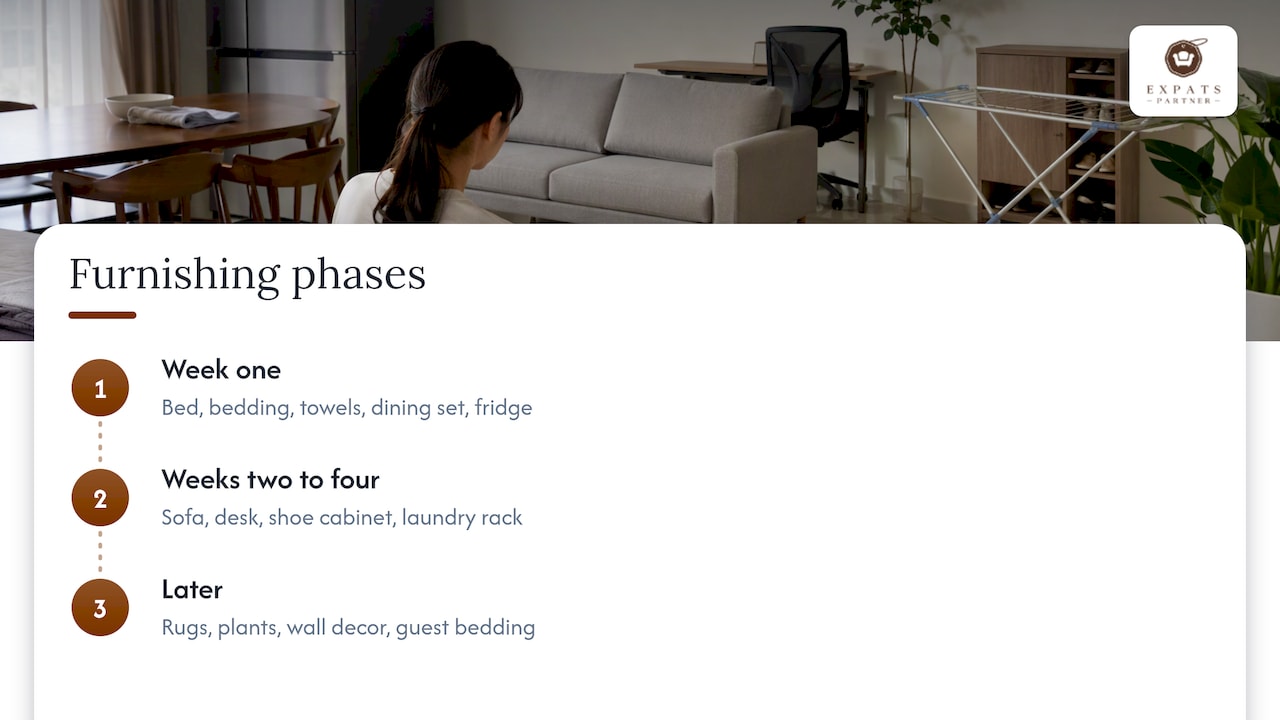
Weeks two to four: sofa, TV console, desk and chair, shoe cabinet, laundry rack, bins.
Later: rugs, plants, wall decor, extra storage, guest bedding.
FAQ
What furniture do I need first in a new home?
Start with a bed and mattress, somewhere to eat, and the core appliances such as a fridge and washing machine. Add lighting next, since many flats have only basic ceiling lights. Sofas, rugs and decor can follow once you know how you use the space.
Is it cheaper to rent or buy furniture for a Singapore home?
For stays of a year or two, renting avoids a large upfront payment and the cost of storing or disposing of furniture later. For many years in one home, buying can work out cheaper over time. Compare the total monthly rent for the period you expect to stay against what you would pay to buy and later sell or dispose of the same pieces.
Do I need to include appliances in a full-home furnishing list?
Yes, and check the tenancy inventory first, because landlords often supply some but not all. Confirm which appliances are provided, test them on move-in day and record their condition. Any electrical item you buy should carry the SAFETY Mark.
How do I protect my deposit when I furnish a rental?
Keep a dated, signed inventory with photos of every existing mark, and record the condition of any furniture you bring in. Keep your own copy. Clear records let you and the landlord settle any deductions item by item instead of disputing the whole deposit.
Can I rent a full home of furniture for a short stay?
Yes. We offer short and long-term furniture rental and packages sized to 1-bedroom and 2-bedroom homes, with delivery and collection coordinated for you. Check the packages page for the current options and prices.
#FurnitureRental #SingaporeLiving #ExpatRelocation #HomeFurnishing